The truth is, homes change over time — and technology has to adapt, not try to do everything at once.
Tony Fadell
The phrase ‘the Internet of Things’ can really be applied to any household item now. With almost any machine that can be connected to the internet such as fridges that can stream Spotify and QR-scanning juice machines, one starts to wonder if these ‘smart’ wifi-enabled machines are really needed.
When I think of ‘smart’ devices, the first thing that comes into mind is my smartphone; the Google Pixel 3. After previously being an iPhone user, I made the switch to Google’s Pixel smartphone due to the rich ‘Internet of Things’ ecosystem that Google has created that trumps Apple’s existing ecosystem. The Google ecosystem includes all of Google’s apps and programs (Google search engine, Gmail, Google Docs, Google Calendar, etc) and electronic products such as smart speakers, smart displays, and smoke detectors.

Google’s extensive program and device ecosystem, facilitated with Google’s AI, Google Assistant, makes Google a very lucrative ecosystem to outfit a smart home with. Personally, I too agree with this statement as a user of Google’s ecosystem and having a friend who uses Google’s ecosystem and products extensively, it is not hard to see why Google’s smart home functionality is top tier due to its IoT integration. Google Assistant delivers a near-flawless experience in terms of convenience, accessibility and integration. With the AI being able to perform a myriad of tasks from setting alarms and reminders to more impressive functionalities such as; live conversational interpretations and flight check-ins, I feel that Google has truly created a unique smart ecosystem of ‘internet of things’ facilitated by its AI.
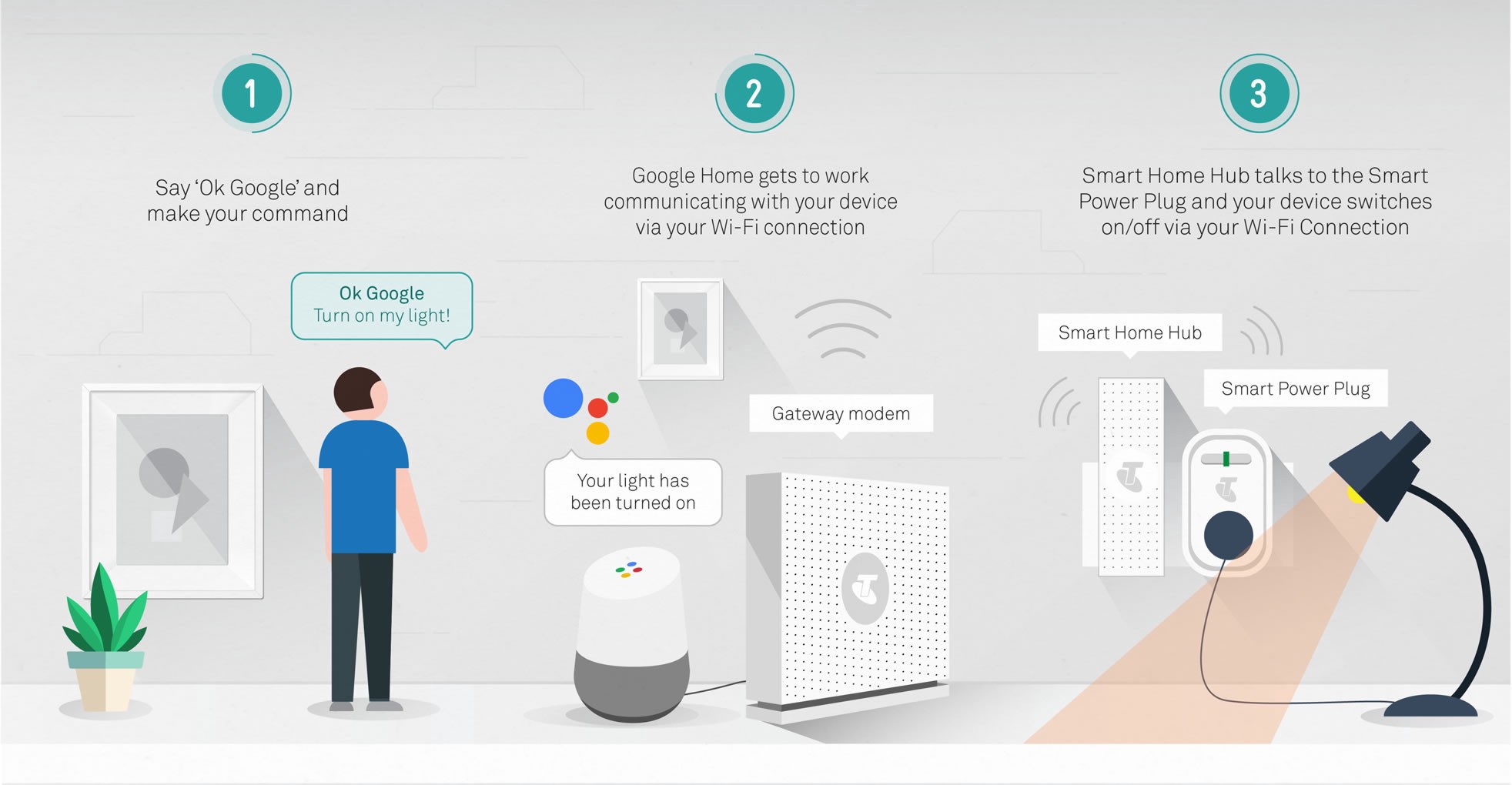
So why and how does the Internet of Things concept play such a huge part in creating a smart home ecosystem? Having an IoT device allows for a two way flow of data between the IoT device and Google Assistant AI, enabling a feedback loop where outputs of a system are routed back as inputs. What makes Google Assistant an extremely strong competitor in the smart home market is mainly due to Google’s excellent voice recognition software. I feel that using speech as communication medium is arguably the most sensible form of communication due to the ease and clarity that verbal cues and conversations embody when carrying out day-to-day tasks. There is something very satisfying behind the simplicity of being able to say ‘Ok Google, set an alarm for 7:30am tomorrow’, and having it synced up to your Google Home smart speaker as compared to manually scrolling and tapping through your phone’s alarm function or fiddling with buttons on an alarm clock just to set an alarm.
Having a smart home is becoming a norm rather than remaining as a trend with the increasing availability of IoT devices. This is due to the rich value that a smart home possesses; increasing our quality of life. Personally, I feel that having a ‘smart’ home would be advantageous due to increased automation and monitoring of device usage would help in increasing my productivity and optimizing my electricity usage. In addition to improving a inhabitant’s quality of life, from a marketing perspective, it creates another interesting perspective which is the potential increase in value in homes which are outfitted with IoT devices and integrated into a smart device ecosystem.

With Google becoming the choice ecosystem for a smart home, this makes it a very lucrative position for Google to be in due to the collection of big data from their vast network of individual ecosystems. Big data, such as consumers’ music preferences, online shopping orders, and even sleep habits, which are passively gathered can be analyzed and used to deliver custom-tailored advertisements to their consumers. I feel that this is a strategic marketing move as this allows Google to tap into a huge market which has been pre-segmented based on big data analysis, allowing specific advertisements to reach their targeted audience.
While smart home integration still has a long way to go before it becomes a staple to have an smart, IoT device ecosystem in homes, do you feel feel that the IoT device ecosystem is heading in the right direction? How else can ecosystems, the collection and analysis of big data benefit marketers? Share your thoughts in the comments!
 Sher Min's Digital Marketing Blog
Hi SherMin! My big sister has a Google home herself as well and I remember she would always ask Google to do things for her such as turning on the Television and even on the lights. In fact, I believe that Smart homes are slowly being integrated into our lives already there are even smart doors where you use voice command to open the door. However, the downside would be what if it is raining and your voice changes, you would be locked out of your house! What do you think? is integrating smart homes into our lives a good thing or a bad thing?
LikeLike
Hi Xin Yee! Thanks for sharing your story about your big sister’s Google home device! I feel that smart devices and creating a smart home with many IoT-enabled devices still has a long way to go as it is not fully optimized yet. Another example I have of Google home not being completely reliable as of now is how both of my friends own Google home devices. One of them always has his speakers on, and Google home can get triggered when he watches videos where people say Google home commands. He then has to cancel whatever action was queued up to be executed by Google home. Quite annoying!
I feel that smart homes be both good and bad. The good is that they can help us monitor and optimize things such as power usage and efficiency, set reminders and sync up to a wide variety of IoT-enabled devices in our home. However, the bad is that we do not know when our devices are actually actively ‘listening’ in on us and private conversations with sensitive information (credit card, personal information) might be recorded. In addition to that, we do not know if these devices can be easily hacked into, allowing for the unwanted collection of data, or even worse; hackers messing with our smart homes by setting alarms at 4am, or making unwanted Amazon purchases.
Therefore, we must approach this new technology with caution before fully embracing it.
LikeLike